
Precision Tube Bending: Engineering Reliable, Repeatable, and Clean Flow Systems
Comprehensive Guide to Tube Bending
Table of Contents
- Introduction: Why Tube Bending Matters in Modern Manufacturing
- Real-World Challenges Tube Bending Solves
- Fundamentals of Precision Tube Bending
- Key Factors That Influence Tube Bending Success
- Common Challenges in Tube Bending
- The Mechanics and Materials Behind Perfect Tube Bends
- Material Considerations in Tube Bending
- Tube Bending vs. Welding
- Quality Assurance and Testing in Tube Bending
- Precision in Practice: Efficiency and Reliability
- Conclusion: The Future of Precision Tube Bending
Introduction: Why Tube Bending Matters in Modern Manufacturing
Precision tube bending is central to building high-performance flow systems that meet demanding standards for cleanliness, strength, and reliability.
Across advanced industries, every detail counts. Precision tube bending services determine how systems perform, whether carrying high-purity gases in semiconductor fabrication or sterile fluids in medical device applications.
When executed correctly, bending replaces multiple welded joints with a single continuous path. This:
- Eliminates potential leak points
- Reduces turbulence
- Simplifies cleaning
- Shortens assembly time
- Improves repeatability across production runs
We manage tube bending as a complete engineering process. Each project begins with material evaluation, digital simulation, and precise tooling setup. Combined with advanced CNC and hybrid systems and Class 100 cleanroom capability, this approach ensures every bend is consistent, clean, and reliable.

Upgrade Your Process with Precision Bending
Download the guide and explore how CNC bending reduces costs across the lifecycle.Real-World Challenges Tube Bending Solves
Across industries, precision bending provides cleaner, safer, and more efficient flow systems:
Semiconductors rely on particle-free gas and chemical lines that must remain leak-tight under high vacuum.
Medical and life-science manufacturers depend on smooth interiors that maintain sterility during repeated use and cleaning.
Automotive systems use lightweight, tightly bent tubing to maximize performance in limited spaces.
Chemical and biopharma facilities require corrosion-resistant assemblies that can withstand pressure and temperature extremes.
Each of these sectors benefits from Axenics’ ability to design and deliver bends that meet exact standards for purity, strength, and precision.
Emerging Trends in Tube Bending
Advancing technology continues to refine efficiency, quality, and sustainability.
Automation and robotics now support faster changeovers and consistent output in large production runs. Predictive maintenance and digital calibration reduce downtime while maintaining accuracy.
Sustainability is also influencing process design, with more facilities selecting energy-efficient hybrid benders and recyclable materials.
New industries such as hydrogen energy and advanced microelectronics are driving the next wave of innovation, where even tighter tolerances and higher cleanliness standards are required. Axenics remains at the forefront of this evolution through continuous process development and investment in precision technology.
Fundamentals of Precision Tube Bending
Understanding how tubing reacts to force, motion, and stress is the foundation for dependable, repeatable results.
Tube bending transforms straight tubing into compact, efficient shapes while protecting internal surfaces. Continuous bends replace assemblies filled with welds and fittings, producing smooth flow paths that improve efficiency and lower maintenance.
Three variables govern every bend:
Material composition
Wall thickness
Bend radius
Balancing these factors prevents deformation and maintains the mechanical strength of the tube. Every stage of precision tube bending at Axenics is engineered for accuracy and repeatability, ensuring smooth flow paths for high-performance systems.
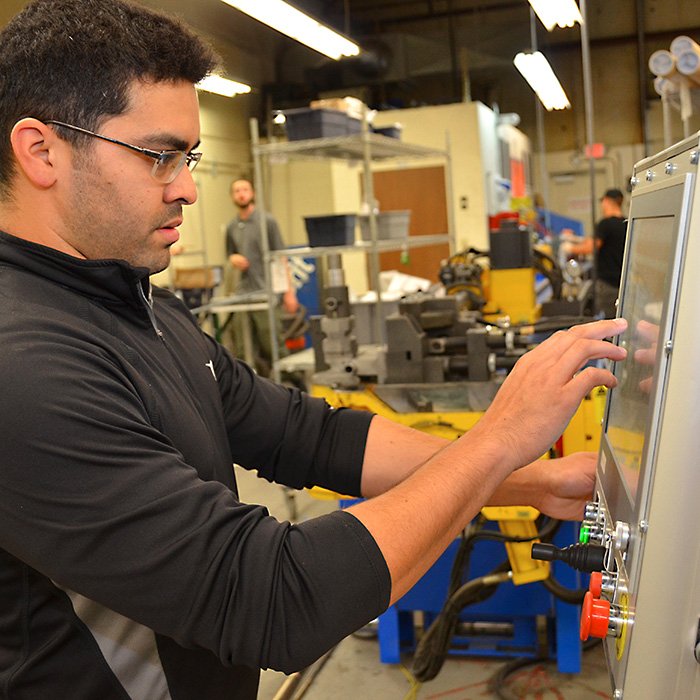
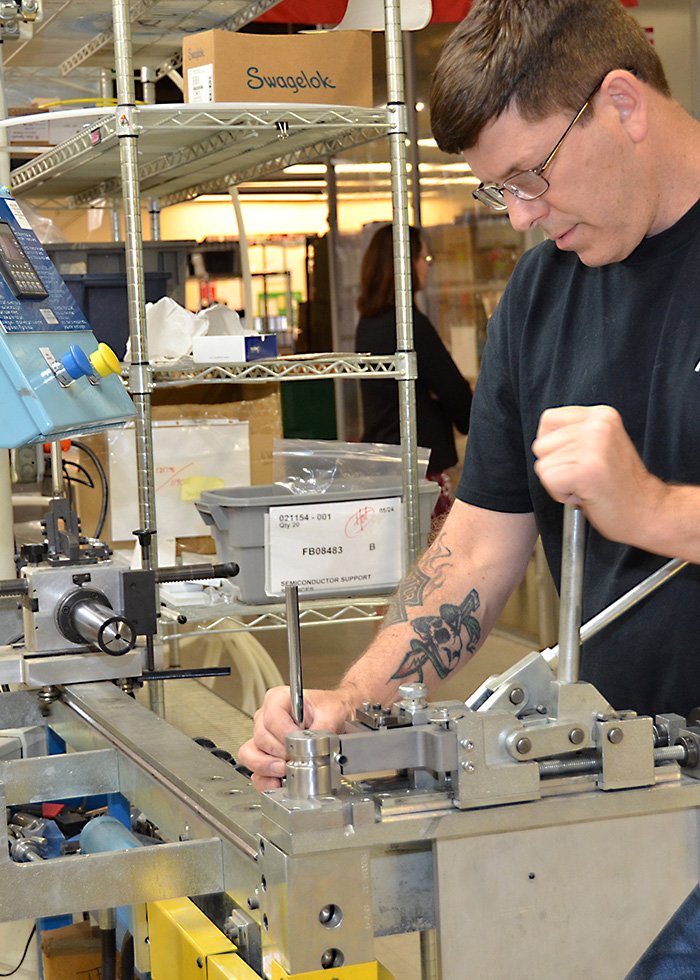
Axenics combines operator skill with CNC precision to control each parameter, achieving repeatable accuracy within fractions of a degree.
Types of Tube Bending Methods
Different techniques address different goals, from prototypes to high-volume production.
- Manual bending is ideal for small batches and prototypes. Skilled technicians adjust pressure, feed, and angle to accommodate variations in material behavior.
- CNC bending uses automated control for tight tolerances and high repeatability, which are key for semiconductor and life science systems manufacturers.
- Hybrid bending merges electric and hydraulic systems, offering both precision and power. These machines excel in stainless steel, titanium, and other alloys that require force and control in equal measure.
Each method succeeds only with proper alignment, clean tooling, and careful setup before production begins.
Mastering Mandrel Bending
Mandrel bending enables tight radii and flawless surfaces for critical flow systems.
When tubing must bend tightly without losing shape, a mandrel provides the internal support needed to prevent wrinkling or collapse. The mandrel remains inside the tube during forming, allowing precise control of wall thickness and roundness.
Mandrel bending achieves radii as tight as one times the tube diameter and is essential in high-purity assemblies. At Axenics, mandrel bending can be performed inside a Class 100 cleanroom, maintaining a contaminant-free environment from start to finish.
Get Our CNC Tube Bending Radius Chart Download the full guide to ensure every bend meets spec.
Key Factors That Influence Tube Bending Success
In precision tube bending, engineering foresight and preparation determine the outcome before the first bend is made.
Successful bending begins with early planning between Axenics’ engineers and customers for defining radii, tolerances, and material requirements that align with overall system goals.
Bend simulation verifies geometry before production, ensuring parts will fit and function within the target assembly.
Tooling calibration guarantees that every die and mandrel is aligned precisely, maintaining uniformity throughout long production runs.
Clean lubrication reduces friction and protects surfaces. Axenics uses synthetic, non-petroleum lubricants that leave no residue and meet cleanroom standards.
These practices turn precision tube bending into a controlled, data-driven process that eliminates costly rework.
Engineering Collaboration for Manufacturability
Early engagement on precision tube bending projects ensures that bend radii, material behavior, and assembly access all align with final system requirements.
At Axenics, this partnership often starts with a review of CAD models and digital bend simulations. By validating bend feasibility and minimum radius early, unnecessary welds and fittings can often be eliminated.
Design for Manufacturability (DFM) reviews focus on factors such as material selection, bend sequence, clearance for tooling, and accessibility for assembly. This proactive approach saves time during installation and reduces rework later in the project.
When tube bending and system design move in parallel, the result is a faster, more predictable production process with a stronger final assembly.
We adhere to strict material handling protocols that eliminate cross-contamination, ensuring every weld’s purity and strength.
Build Stronger Systems from Day One
Get the guide that shows how to choose the right bend radius, tooling, and materials.Common Challenges in Tube Bending
Experience and process control prevent the issues that compromise performance.
Springback and radial growth occur when tubing relaxes after bending. CNC programs automatically apply overbend angles to achieve precise final geometry.
Wall thinning and wrinkling can appear when pressure and support are unbalanced. Proper mandrel design, wiper-die alignment, and accurate lubrication preserve uniform wall thickness. These variables are especially critical in precision tube bending, where even minor inconsistencies can disrupt flow or cause leaks in high-purity systems.
Weld seam orientation affects both strength and appearance. Aligning seams before forming avoids distortion and ensures consistency.
Surface quality depends on tool condition and cleanliness. Regular inspection and maintenance protect both the tube and the equipment.
Each of these variables is monitored and documented at Axenics to ensure every precision tube bending operation meets specification.
Preventing Process Drift and Defects
Continuous monitoring and skilled technicians maintain consistency throughout production.
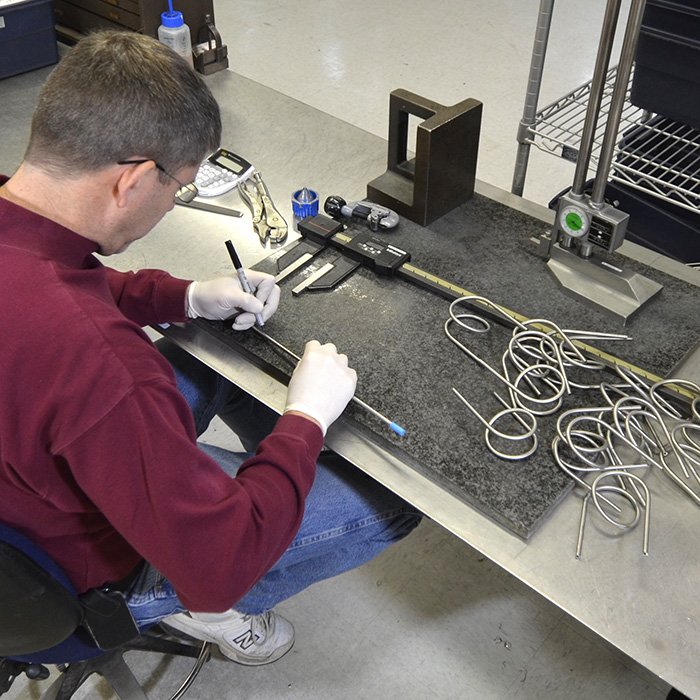
This consistency is what defines Axenics’ approach to precision tube bending, where each measurement and tool calibration is validated against digital benchmarks. Axenics employs certified operators who undergo regular training on new materials and bending technologies. During production, technicians monitor wall thickness, bend angle, and radius using laser and digital inspection gauges. Real-time feedback identifies small deviations before they become defects.
Tooling is checked and recalibrated between runs, ensuring that wiper and mandrel surfaces remain sharp and aligned. This disciplined approach prevents process drift, maintains repeatability across thousands of parts, and extends tool life.
These preventive practices deliver measurable stability, reducing scrap and protecting production schedules.
The Mechanics and Materials Behind Perfect Tube Bends
Advanced equipment, precise tooling, and skilled operators work together to achieve repeatable excellence.
Machinery That Defines Precision
Hybrid CNC benders provide the accuracy, torque, and flexibility required for precision tube bending in stainless steel, titanium, and specialty alloys. Integrated sensors measure rotation and pressure, while CAD interfaces allow digital simulations to predict results before material is cut.
Tooling, Setup, and Lubrication
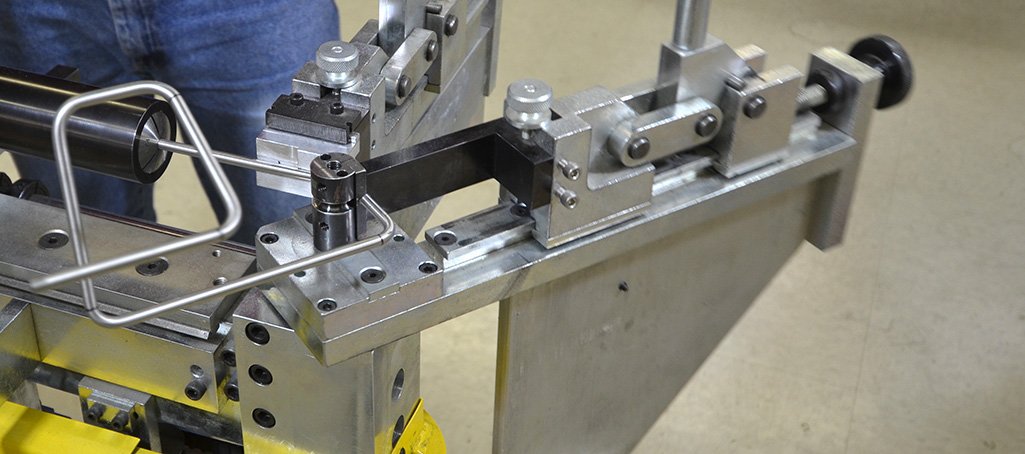
Each component in the tooling system serves a specific purpose:
- Mandrel: supports the tube interior and maintains roundness.
- Bend die: defines radius and guides the shape.
- Clamp die: secures the tube against movement.
- Wiper die: smooths material flow and prevents wrinkling.
Precise setup, alignment, and lubrication are essential. Axenics technicians verify every detail before forming begins to ensure uniform results across production runs.
Material Considerations in Tube Bending
Each material reacts differently to stress, and understanding those reactions ensures consistent performance.
Stainless steel (300 series) provides strength, corrosion resistance, and cleanability, making it the preferred choice for high-purity systems.
Aluminum (3003, 5052, 6061) offers lightweight and thermal conductivity. It bends well when the proper alloy and radius are selected.
Copper and brass are highly formable and suited for smaller or conductive assemblies, though they need internal support to prevent distortion.
Fluoropolymers (PTFE, PFA, FEP) deliver exceptional chemical resistance and purity. Specialized forming techniques preserve their smooth internal surfaces.
Material behavior guides every process decision, from die selection to lubrication and bend radius control.
Specialty Materials and Custom Applications
Projects that use exotic materials demand precise technique and controlled environments.
Nickel alloys such as Inconel and Monel withstand heat and corrosive environments. Bending them requires tight process control and consistent lubrication.
Titanium combines light weight with extreme strength. It requires slow feed rates and steady temperatures to avoid cracking.
Axenics’ experience with these materials allows engineers to push the limits of performance while maintaining structural integrity and cleanliness.
Cleanroom Considerations in Tube Bending
Clean environments are critical for semiconductor, biopharma, and medical device manufacturing.
Performing precision tube bending in a Class 100 cleanroom environment ensures the final assemblies remain particle-free and ready for integration into high-purity systems.
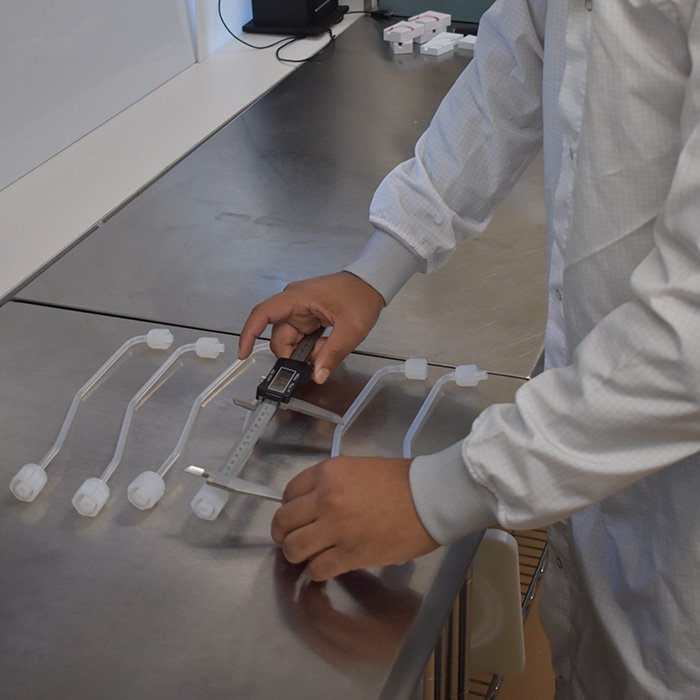
Axenics performs mandrel bending and assembly operations in Class 100 cleanrooms to prevent particle contamination. Air filtration systems maintain continuous laminar flow, and personnel follow strict gowning and handling procedures.
Tubes are cleaned, capped, and sealed immediately after bending to protect internal surfaces from airborne particulates or oils. For high-purity applications, this process ensures that tubing arrives ready for installation, minimizing additional cleaning or validation.
Maintaining these controlled conditions allows Axenics to meet the demanding cleanliness standards required by industries that cannot tolerate compromise.
Tube Bending vs. Welding
Bending and welding complement one another, each playing a role in reliable system design.
Precision bending minimizes the number of welds required, lowering leak risk and reducing assembly time. Continuous bends also provide smoother internal flow and easier cleaning.
Welding remains essential for joining different diameters, connecting to manifolds, or attaching specialized fittings. Axenics employs both TIG and orbital welding for consistency and purity in these connections.
By combining bending and welding strategically, systems achieve both strength and efficiency with fewer potential points of failure.
Lifecycle and Cost Comparison
Evaluating long-term performance reveals the full value of precision bending.
Continuous bends reduce inspection steps, eliminate filler materials, and simplify system validation. Fewer joints mean fewer opportunities for leaks, reducing maintenance and downtime over the system’s life.
In contrast, welded assemblies require visual inspection, non-destructive testing, and occasional requalification. Over time, these added requirements increase labor and validation costs.
Quality Assurance and Testing in Tube Bending
Verification is built into every stage of production.
Axenics applies quality control from setup through final inspection:
- In-process measurement confirms bend angles, radii, and lengths using digital instruments.
- Leak and pressure testing with helium or nitrogen ensures structural integrity.
- Cleanroom inspection verifies that surfaces remain free of particles or residue.
- Documentation provides complete traceability, from material certification to final dimensional records.
Inspection Technologies and Traceability
Advanced inspection tools deliver confidence and accountability.
Axenics uses optical scanners, coordinate measuring machines (CMM), and helium mass spectrometry to verify accuracy and leak integrity. Inspection data is logged electronically and tied to specific serial numbers for full traceability.
These records support customer audits and long-term system validation, ensuring that each component performs as designed in critical environments.
Reduce Rework with Better Bending
Get the guide that shows how consistent radii and clean bends streamline production.
Precision in Practice: Efficiency and Reliability
Comprehensive control translates to measurable savings and long-term value.
Precision tube bending reduces assembly complexity, improves consistency, and enhances operational uptime. By integrating cutting, forming, and testing under one roof, Axenics minimizes coordination delays and maintains steady quality across large orders.
Efficiency advantages include:
- Lower part counts and simplified logistics
- Shorter installation time
- Consistent geometry and performance
- Reduced maintenance over the system lifecycle
For manufacturers focused on reliability and throughput, precision tube bending offers a clear return on investment.
Conclusion: The Future of Precision Tube Bending
Technology, experience, and innovation continue to define the next generation of manufacturing excellence.
Precision tube bending has evolved from manual craft to digital precision. Modern hybrid machines, advanced materials, and simulation software make it possible to produce cleaner, tighter, and more reliable assemblies than ever before.
At Axenics, decades of technical expertise combine with continuous investment in automation and cleanroom processes. The result is tubing that performs flawlessly, reduces maintenance, and supports long-term system stability.
When performance and reliability are essential, precision tube bending provides the foundation for manufacturing success.
Get Our CNC Tube Bending Radius Chart. Download the full guide to ensure every bend meets spec.
FAQs
Precision tube bending is all about shaping straight tubes into specific forms while keeping an eye on the bend radius, wall thickness, and overall geometry. The aim is to create smooth, uninterrupted flow paths that uphold mechanical strength, cleanliness, and consistent performance in critical systems. Tube bending plays a crucial role by cutting down on the number of welds and fittings in a system. This not only reduces the chances of leaks but also makes cleaning easier and speeds up installation. In environments that demand high purity and performance, bent tubing ensures smooth flow, steady pressure, and long-lasting reliability. Industries that rely on clean and dependable flow systems greatly benefit from precision tube bending. This includes sectors like semiconductor fabrication, medical device and life science manufacturing, chemical and biopharma processing, automotive systems, and even emerging fields like hydrogen energy and advanced microelectronics. Mandrel bending involves using an internal support tool, known as a mandrel, which sits inside the tube during the bending process. This tool helps prevent issues like wrinkling, flattening, and wall thinning, ensuring the tube stays round and maintains a consistent thickness. It’s particularly important for tight radius bends, high purity assemblies, and any application where the quality of the interior surface is critical. Tube bending and welding complement each other in a well-designed system. Bending reduces the number of welds by creating continuous paths, which minimizes leak points and the need for inspections. However, welding is still necessary for joining different tube sizes, connecting to manifolds, and attaching specialized fittings. When used together effectively, they enhance both reliability and efficiency. You’ll typically find materials like stainless steel from the 300 series, aluminum alloys such as 3003, 5052, and 6061, as well as copper and brass. Fluoropolymers like PTFE, PFA, and FEP also make the cut, along with specialty alloys like Inconel, Monel, and titanium. Each of these materials comes with its own set of requirements for bend radius, feed rate, and support, all of which need to be carefully managed to achieve consistent results. Axenics employs a combination of CNC and hybrid bending equipment, along with digital simulations, tooling calibration, and in-process measurements. They verify bend angles, radii, and lengths using digital instruments, and conduct leak or pressure tests with helium or nitrogen when necessary. They also keep detailed records of inspection data and material certifications for complete traceability. Absolutely! For applications requiring high purity, Axenics carries out mandrel bending and assembly operations in Class 100 cleanrooms. They ensure that tubes are cleaned, bent, capped, and sealed in controlled conditions to avoid any particulate contamination, making sure that the assemblies are ready for integration into semiconductor, biopharma, and medical systems. Some typical challenges include springback, radial growth, wall thinning, wrinkling, weld seam distortion, and surface damage from tooling. Axenics tackles these issues by implementing overbend compensation in their CNC programs, selecting the right mandrel and wiper die, using clean lubrication, orienting weld seams properly, and regularly inspecting and recalibrating their tooling. Precision tube bending helps lower lifecycle costs by reducing the number of parts, cutting down on inspection steps, and minimizing the number of joints that could potentially leak or need requalification. Continuous bends facilitate smoother flow, make cleaning easier, shorten installation times, and lead to less maintenance throughout the system's lifespan.What is precision tube bending?
Why is tube bending important in modern manufacturing?
What industries benefit most from precision tube bending?
What is mandrel bending and when is it required?
How does tube bending compare to welding in system design?
What materials are suitable for precision tube bending?
How does Axenics maintain quality and consistency in tube bending?
Is it possible to perform tube bending in a cleanroom environment?
What are the common challenges in tube bending, and how does Axenics manage them?
How does precision tube bending impact lifecycle costs and system efficiency?