
Plastic Welding and Plastic Fabrication Solutions
Table of Contents
- Introduction: Cleanliness is key for plastic welding and plastic fabrication
- Chapter 1: Types of plastic and their benefits
- Chapter 2: Determining the right plastic for you
- Chapter 3: Axenics’ unique plastic welding processes
- Chapter 4: Plastic welding step by step
- Chapter 5: Plastic fabrication FAQs
- Chapter 6: Plastic manifold liquids and gas transportation systems
- Chapter 7: Custom plastic tubing solutions for OEMs
- Conclusion: The future of plastic welding and bending
Introduction
Cleanliness is key for plastic welding and plastic fabrication
Axenics takes the cleanliness of plastic welding and plastic fabrication seriously. Industries such as semiconductor manufacturing and alternative energy require the highest level of purity for finished components. To achieve those results, plastic bending takes place in a cleanroom to keep any particles or contamination from ending up in your production. It only takes a miniscule piece of dust to severely damage a component. It’s like tossing a big, filthy wrench into the gears.
Plastic tubing that is professionally cleaned and bagged by trusted suppliers saves us and our customers time and money. There’s less risk of contamination with professionally cleaned raw plastic tubing.
Chapter 1: Types of plastic and their benefits
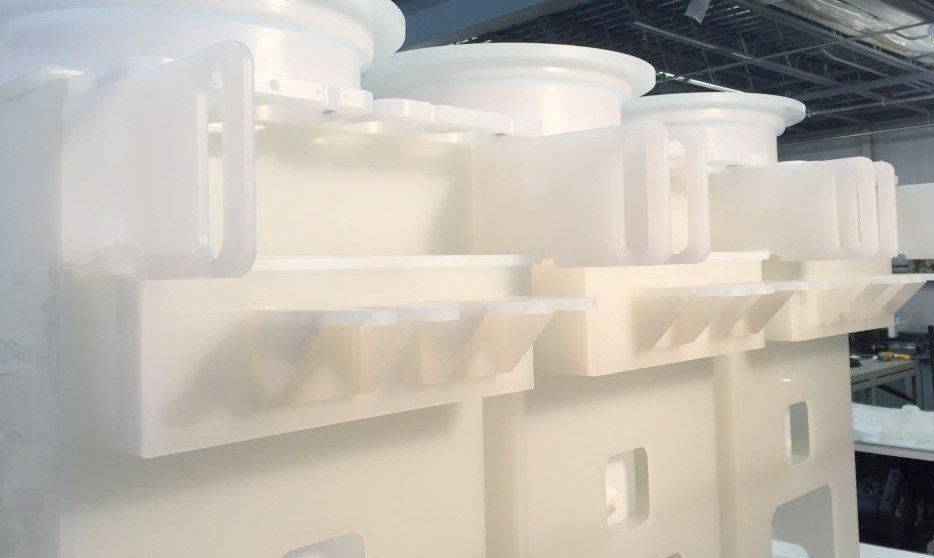
There are a variety of manufacturing plastics to consider, each offering distinct and unique properties. At Axenics, we most commonly work with the following types of plastics:
Polypropylene (PP)
This plastic’s attributes are elasticity and high chemical resistance. PP becomes packaging for consumer products, and has uses in the automotive industry, textiles and more.
Polytetrafluoroethylene (PTFE/PFA)
This thermoplastic material is tough and stable, and has the ability to withstand exposure to harsh chemicals.
Polyvinyl Chloride (PVC)
This is a lightweight, rigid plastic commonly used in construction. PVC’s attributes are strength and fire retardant properties.
Chlorinated Polyvinyl Chloride (CPVC)
This thermoplastic withstands higher temperatures than standard polyvinyl chloride (PVC), which is why it’s found in hot- and cold-water piping and used for industrial liquid handling.
High density polyethylene (HDPE)
This plastic is known for its high strength-to-density ratio. HDPR is found in plastic bottles and plastic lumber.
Polyvinylidene fluoride (PVDF)
This thermoplastic is utilized in applications where high purity is a must, which is often the case in the chemical manufacturing, semiconductor, medical device and defense industries.
Benefits of welding with fluoropolymers/plastics
- Non-flammable
- Raw fluoropolymers can be FDA, REACH, RoHS and USP Class Vi compliant
- Chemically inert
- Low coefficient of friction
- Low permeability
- Fluoropolymer benefits
Chapter 2: Determining the right plastic for you
For plastic welding, we focus on synthetic fluoropolymer tubes. Wikipedia has a great definition of fluoropolymers: They are characterized by high resistance to solvents, acids and bases. The best known fluoropolymer is polytetrafluoroethylene also known by its brand name, Teflon.
We can provide whatever results you need with fluoropolymer tube bending, but the exact plastic used depends on the temperature of your production environment. You don’t want a thermoplastic to relax due to extreme heat, which can weaken your system with cracks, fissures or tube breaks.
What are the differences between PFA, PTFE and FEP?
PFA tubing has stronger heat resistance than FEP, and offers more flexibility than PTFE.
We use PTFE in many semiconductor and medical device manufacturing projects due to its high chemical resistance, capabilities in high and low temperatures capability, top-notch gas and vapor permeability, and that it is known for having the lowest coefficient of friction of any solid material.
FEP tubing is also known for its gas and vapor permeability, but FEP offers a lower heat shrink temperature versus PTFE and is more flexible than PTFE. Raw FEP is the lowest-cost option of these three.
Typically, manufacturing engineers determine what materials and processes are necessary to get to their end result.
PTFE beats the heat
PTFE is Axenic’s top plastic for customers partly due to its high fire rating, meaning it doesn’t melt when it gets exposed to higher temperatures. That’s important to our customers in the semiconductor and medical device manufacturing industries as the environment in which the PTFE tubing is in use could heat significantly with multiple pieces of equipment in action in a closed space. There may be pumps and motors running near the tubing, and the heat from those machines won’t cause the PTFE to crack or alter its innate properties.
Seamless flow with PFA welding
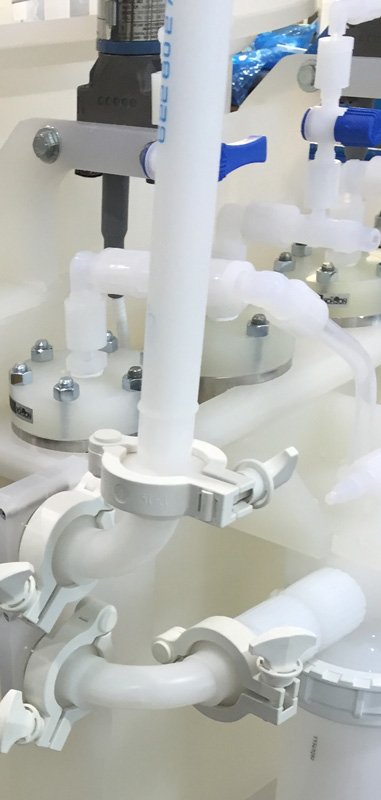
The plastic welding process with perfluoroalkoxy (PFA) is one of Axenics’ specialties. We work with different tiers of manufacturing in the semiconductor chip industry, and those customers’ production systems benefit from low-friction PFA. The plastic is easily formable and offers a super-strong resistance to many chemicals. PFA’s stability also holds up in varying temperature environments, making it the ideal solution for delivery systems where hot or cold harsh chemicals need to flow through seamlessly.
PFA pipe is flexible for multiple configurations
The process of plastic welding into different configurations with a variety of T’s and elbows allows our customers easy access for plugging a manifold into their production system with just two end connections rather than multiple.
This process also reduces potential leak areas. Using T’s, elbows and other weldable fittings/components also allows a system to branch and angle a transportation system into different directions and into tighter tolerances. Space is often a major concern when updating production systems, and plastic welding offers a great deal of flexibility for fitting new components into a working production area.
Chapter 3: Axenics’ unique plastic welding processes
Plastic welding is often a faster and simpler fabrication process versus welding with metals because plastics are generally lighter in weight than many metals. Plastics are also a wise choice for maintaining the safety and reliability of your end product as they are more chemically resistant than most metals.
Our plastic pipe welding experts always look for new techniques for solving problems other manufacturers call “impossible.” This openness to new plastic pipe welder ideas benefits our customers because it allows them to see their concepts come to life.
Solving a real corker of a problem may take some back and forth collaboration with engineering and design, but we’ll arrive at a solution. Even though we’ve performed plastic pipe welding and plastic tube bending for four decades, it’s exciting when we see breakthroughs. Our plastics technicians revel in a fresh challenge.
The proprietary plastic welding method Axenics employs is also highly repeatable, which is helpful as the demand for “more and faster” increases. Axenics’ method of welding plastics does not alter the chemical makeup of the piping and does not compromise the piping in any way. This remains an important distinction that attracts fabrication engineers, as the welded plastic piping kits provide a flawless and consistent transportation system of potentially dangerous and harmful chemicals and gasses.
Plastic welding process
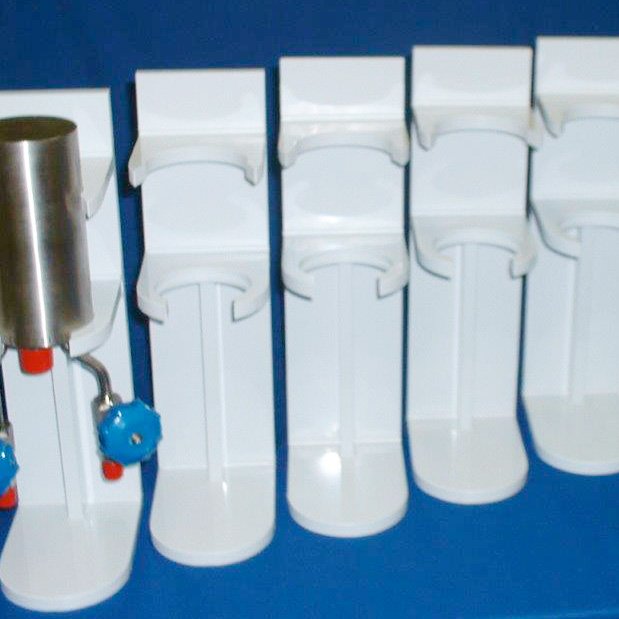
Plastic welding creates a molecular bond between two compatible plastics. Plastic welding provides first-rate strength, and finished welds are long-lasting, meaning any necessary replacements and/or repairs will occur in the distant future. One way plastic welding proves superior to steel weldments is that chemicals can corrode and contaminate metal, severely decreasing its usefulness in certain applications.
Plastic welding produces durable, reliable and complex transportation, monitoring and purification systems. Plastic welders can perform pipe-to-pipe weldments that meet your exact requirements. Plastic welding is a complex process that requires the right set of skills and a strong passion for improving those skills. Plastic welders require significant dexterity and mobility. There is no formal education for plastic welding, you learn best on the job and gain expertise with years of training and working with the various types of plastics used in welding.
Benefits of plastic welding
Plastic welding is often a faster and simpler fabrication process versus welding with metals because plastics are generally lighter in weight than many metals. Plastics are also a wise choice for maintaining the safety and reliability of your end product as they are more chemically resistant than most metals.
- Plastic welds have a strong resistance to acids, alkalis, greases and solvents, hydrogen peroxide, demineralized water and hot steam.
- Plastic welds offer a minimal release of gas under vacuum, which helps maintain a sterile environment.
- Plastic welds have a strong plasma resistance reducing the possibility of corrosion.
- Plastic welds resist thermal degradation and maintain a high operating strength and rigidity in high temperatures.
- Plastic welds offer the benefits of good creep and chemical resistance, minimal thermal expansion and good wear resistance.
- Plastic welding provides a simplified system that delivers a consistent, highly-repeatable performance. There is also the flexibility of easily adding thermoplastic sub-systems that provide multiple flow rates and pressures.
Chapter 4: Plastics Welding Step-by-Step
The success of this welding process hinges on the careful execution of three key stages: surface preparation, heat welding, and controlled cooling. Each of these steps is crucial for ensuring the durability and integrity of the final product.
1. Surface Preparation
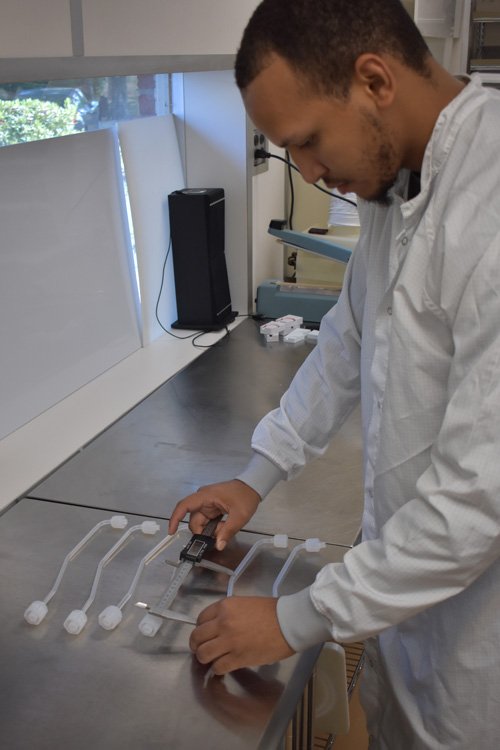
Before diving into the welding process, each plastic piece goes through a thorough inspection to check for cracks, flaws, or surface irregularities. To achieve the best weld strength, it’s essential to clean the surfaces meticulously and, in some cases, abrade them to eliminate dirt, oils, or oxidation.
While surface preparation can take time, it’s vital for achieving top-notch results. Skipping or hurrying this step can lead to weld failures or compromised quality due to contamination.
2. Heat Welding Techniques
Once the surfaces are ready, heat is applied to make the plastic flexible and ready for welding. The most common technique used is hot gas welding, also referred to as heat fusion or butt welding. Depending on the type of plastic, technicians might use:
- Hot gas (often nitrogen)
- Welding rods
- Steam or hot air
- A hot plate
- Lasers
During this process, the softened plastic parts are aligned in a fixture or vise, where steady pressure is applied. This allows the molten edges to combine, creating a seamless bond. Consistent heat and pressure are crucial for ensuring a high-quality weld that maintains structural integrity.
In many instances, nitrogen gas is used in conjunction with heat for thermoplastic welding, providing a clean and stable environment that reduces oxidation and boosts strength.
3. Controlled Cooling
After the welding is complete, the assembly needs to cool under controlled conditions to allow the bond to solidify. This cooling phase is as important as the welding itself. If not done properly, it can result in shrinkage, warping, or internal stress. Maintaining pressure during the cooling process helps retain the desired shape and ensures that the weld cures evenly. Properly cooled welds are more resilient and durable.
Chapter 5: Plastic fabrication FAQs
What’s the best way to bond plastic to plastic?
The best bonding method really depends on the specific types of plastic you’re working with. Some plastics respond better to chemical solvent bonding, while others are more suited for heat-based welding techniques.
Can different types of plastics be welded together?
Generally, it’s not a good idea to weld different types of plastics to each other. Most of the time, there won’t be a strong or reliable bond, which can lead to structural issues down the line. For the best results, stick to welding plastics that are the same or compatible.
How strong are plastic welds?
Welds made from thermoplastics are known for their impressive strength and durability. Many of these materials can outlast metals in some cases, thanks to their resistance to corrosion and chemical breakdown.
What are typical applications for welded plastics?
Welded plastics find their way into various industries, including medical device manufacturing, life sciences, semiconductor production, and chemical processing. These welds are crucial for safely transporting gases and chemicals through sensitive systems, where metal components might corrode or compromise purity.
Is it possible to melt plastic pieces together?
Absolutely, you can melt and join plastic pieces, but only if they’re of the same type. While melting is part of the welding process, just melting two pieces of plastic together isn’t the same as precision welding, which requires controlled heat and pressure to create a secure and lasting bond.
Can a soldering iron be used to weld plastic?
It might seem like a quick fix, but a soldering iron isn’t the right tool for plastic welding. It doesn’t provide the consistent heat and pressure needed for a strong weld. Bonds made with a soldering iron tend to be weak and can fail, especially in situations involving liquids, gases, or chemicals.
Axenics’ in-house plastic experts have decades of experience innovating thermoplastic welding and bending techniques. There’s virtually no limit on the length of thermoplastic pipe we can weld and bend for your production, and no limit on the complexity or number of welds.
Chapter 6: Plastic manifold liquids and gas transportation systems
Plastic manifold transportation systems provide a continuous supply of chemicals for a variety of applications during the manufacturing process. These systems have a smaller footprint than other options due to built-in direct pathways, resulting in simple transport for liquids and gasses. The systems are versatile with the ability to expand using additional manifolds or transport lines. Manifold transportation systems also provide easy access for repairs – though repairs are uncommon for this type of system.
The manifolds Axenics produces for our customers are tested during each step of production to ensure a leak-tight performance. Fewer leak points also make manifolds a more-reliable transportation system for chemicals, liquids and gasses, as the risk of cross-contamination is lowered significantly.
Plastic manifold transportation systems are smaller than many other delivery systems with a lower part count, making them more affordable on the materials side. Plus, they generally have a faster production time than other delivery systems. One more plus is that the need for preventative maintenance is low for manifold delivery systems.
Axenics works to provide a simplified, reliable system that delivers consistent, highly-repeatable performance, with the flexibility of subsystems that have the capability for multiple flow rates and pressures. Plastics can deliver those results, and some plastic options offer better insulation than metal manifolds.

Manifolds can be used in the production of medical equipment including:
- Lab accessories
- Patient monitoring devices
- Diagnostic instruments
- Operational machinery
Additional plastic manifold benefits
- High thermal mechanical strength: Some plastics are able to resist thermal degradation and maintain operating strength and rigidity in high temperatures
- Good chemical resistance to acids, alkalis, greases and solvents, hydrogen peroxide, demineralised water and hot steam
- Minimal outgassing (gas release within solid material) under vacuum: This is especially important in the medical device industry as maintaining a sterile environment is essential
- Good creep resistance
- Minimal thermal expansion
- Good wear resistance
- Good plasma resistance for reduced corrosion
Chapter 7: Custom Plastic Tubing Solutions for OEMs
When it comes to fluid and gas transfer in complex assemblies, precision-bent plastic tubing is a game changer for OEMs. Our unique bending technologies significantly reduce the chances of kinks, which can throw a wrench in the flow, lead to blockages, or even cause expensive downtime. By ensuring smooth, uninterrupted internal pathways, our tubing guarantees top-notch performance, even in the toughest production settings.
Contamination-Controlled Fabrication
To keep your products pristine, Axenics provides custom tube bending in a certified Class 100 cleanroom. We only work with plastic tubing that arrives professionally cleaned and bagged by the supplier. This proactive approach helps cut down on contaminants from the start, lowering the risk of introducing foreign particles during the fabrication process.
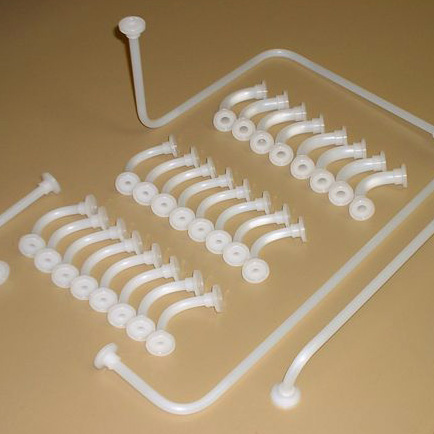
Fewer Fittings, Simplified Assemblies
One of the standout benefits of custom-bent tubing is that you won’t need as many fittings and joints. With bends crafted to your exact specifications, you often won’t need extra elbows, T-joints, or couplings. Fewer fittings translate to lower material costs, quicker assembly times, and fewer potential points for failure or leaks.
We do a lot of work with Polytetrafluoroethylene (PTFE), a chemical-resistant plastic that is ideal for transporting potentially-harmful liquids or gasses. Tube bending for delivery systems is also performed in-house on plastics such as:
- Polypropylene (PP)
- Polyvinyl chloride (PVC)
- Chlorinated polyvinyl chloride (CPVC)
Bending high-purity plastic tubes is a good option for production systems that transport corrosive liquids or volatile chemicals. Savvy manufacturers utilize plastic tubes for high-purity applications knowing there’s a smaller chance of contaminants getting into gas and liquid supplies versus some metal tubing systems. Metal tubes potentially suffer from flaking welds when high-pressure gas and liquids flow through them.
Axenics’ proprietary technique for plastic tube bending allows for a strong system free of kinks. This process works on plastic tubing as thick as 2 inches down to 1/16th-inch. Through years of experimentation, Axenics’ technicians developed tube bending equipment and techniques with better performance than “standard tube bending.” These techniques and tooling options help achieve tighter tolerances and accomplish more modifications than conventional tooling and procedures typically allow. Custom tooling achieves the exact bend radius, angle and design required in a repeatable bending process. It’s also possible to bend any length of thermoplastic tubing.
Plastic tubing kits facilitate the movement of liquids and gasses from one area of a manufacturing system to another in one clean, clear shot. This expedites transport around components and other obstacles in a production system. End connections for tubing assemblies can simply mate with the connections already installed in an existing production space.
Additional Benefits of Axenics’ Plastic Tubing Solutions
- Resilient against vibration fatigue, making it ideal for integration into large or mobile machinery
- Requires less raw material than traditional piping systems, improving cost-efficiency
- Minimizes leak risk due to fewer joints and high-precision welds
- Seamlessly integrates into existing systems without compromising structural integrity
Conclusion:
The future of plastic welding and bending is bright
Our customers in semiconductor and life sciences manufacturing see an increase in laboratory productivity when switching from stainless steel components to plastics. The unmatched chemical resistance of polytetrafluoroethylene is one of the top reasons manufacturers continue to shift from metals to plastics.
Reasons manufacturers make the switch from metals to plastics:
- High-quality plastics feature stronger wear resistance than some metals, giving them a longer production life.
- Plastics are more chemically-resistant than many metals
- Many plastics resist thermal degradation and maintain operating strength and rigidity in high temperatures
- Plastic tubing offers better insulation than some metals
- In many cases, manufacturing with thermoplastics is less expensive than using stainless steel
Please contact us if you’re open to discussing how switching to plastic components will improve your manufacturing process.
